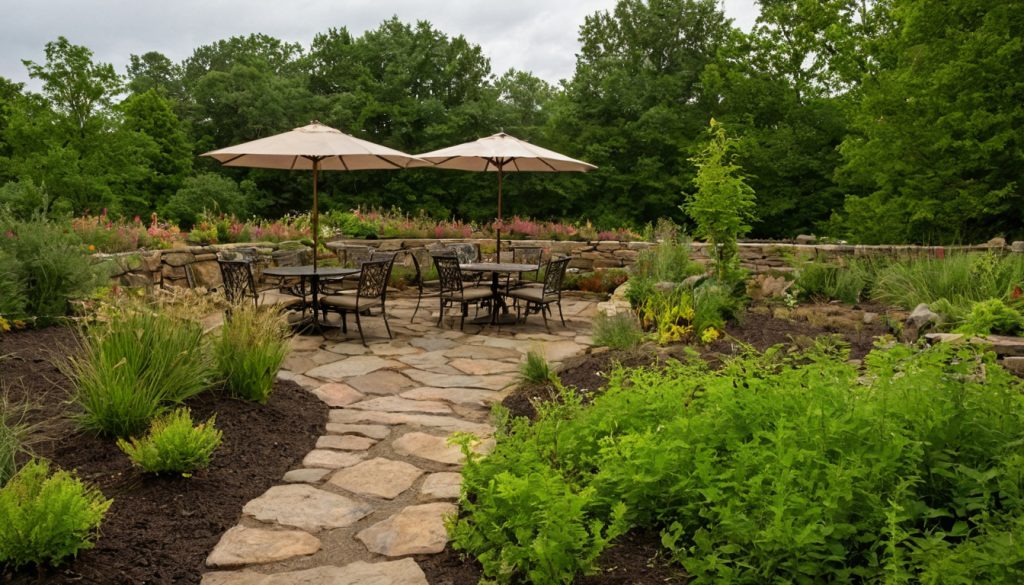
A chair can look intact after a storm yet hold water inside its frame, fade unevenly, or consume the opening crew’s reset window. The costly mistake is not choosing the wrong material label. It is releasing an order without configuration-specific evidence and a timed trial at the restaurant.
Outdoor restaurant seating should begin with a site-specific exposure and operations schedule
Buy outdoor restaurant seating against a written exposure-and-operations schedule, not a generic “commercial grade” label. The schedule must define weather exposure, corrosive sources, wind procedures, service demands, cleaning agents, storage limits, reset labor, budget, and intended service life.
Which outdoor exposures must the restaurant document before requesting quotes?
The exposure schedule gives manufacturers and dealers one operating baseline. Without it, competing quotations may describe products intended for different climates, cleaning methods, duty cycles, or overnight-storage conditions.
- Record the site. Identify the restaurant address, patio orientation, seasonal operating dates, direct-sun and shade periods, irrigation overspray, and exposure to food, pool chemicals, coastal salt, or road salt. NOAA U.S. Climate Normals provide official 30-year averages for 1991–2020 and separately identified 15-year supplemental normals for 2006–2020. Use a representative station, then account for patio conditions the station cannot show.
- Check operating weather. Compile location-specific rain, temperature, humidity, freeze-thaw, and prevailing-wind records. NOAA Climate Data Online provides historical station observations for selected dates and datasets. Add the restaurant’s procedures for severe-weather closure, furniture removal, and reopening.
- Measure the workload. State covers per service, operating hours, reset frequency, cleaning products, pressure-washing practices, and available labor minutes. Specify whether furniture remains outside, stacks on the patio, moves into storage, or is secured in place.
- Set the commercial limits. List the budget, planned service life, warranty expectation, spare-parts policy, storage capacity, and acceptable replacement lead time.
What does “commercial outdoor use” mean for the exact seating configuration?
“Commercial outdoor use” has purchasing value only when the manufacturer defines it for the submitted configuration. Require documents naming the exact model, frame alloy or substrate, pretreatment, coating system, fasteners, glides, upholstery, cushion insert, and tabletop construction.
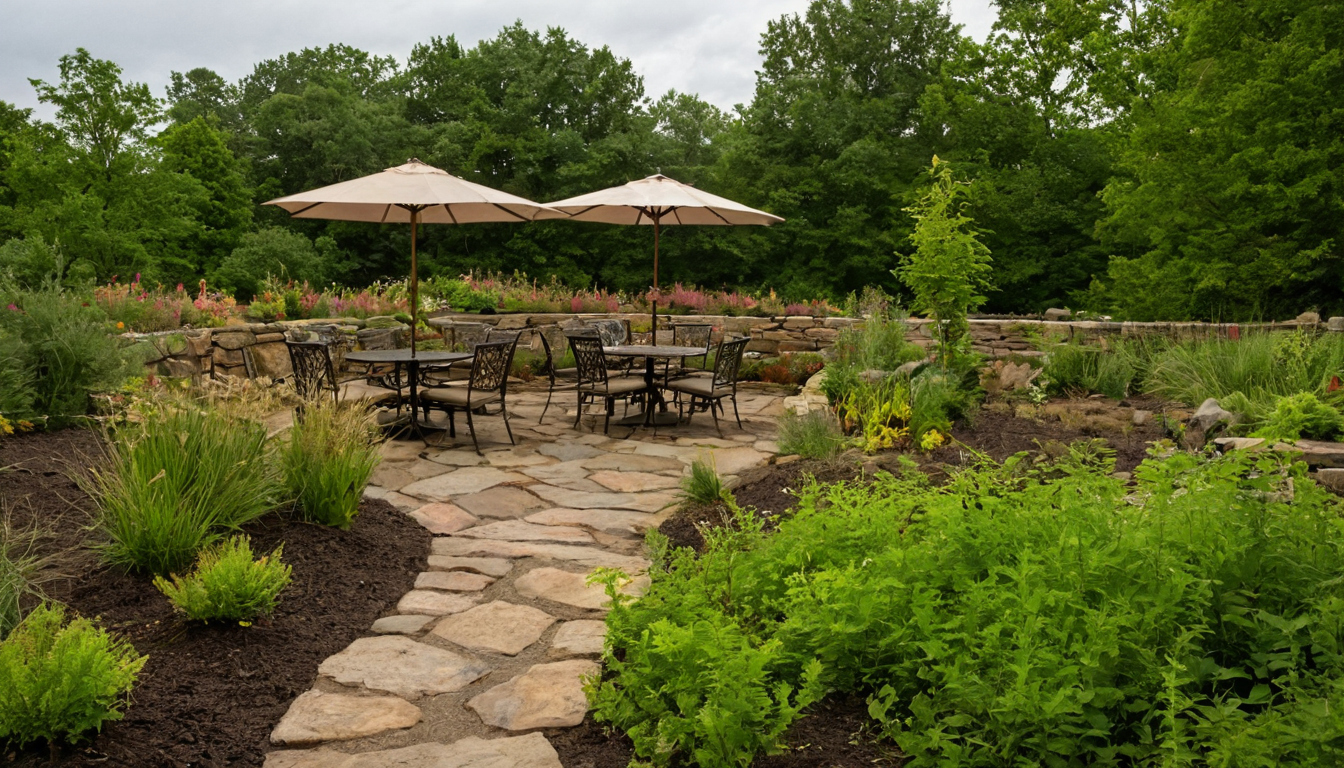
Outdoor restaurant seating should begin with a site-specific exposure and operations schedule shown as a landscape planning reference.
- Confirm the rated duty cycle, tested load, warranty term, installation limits, cleaning restrictions, and availability of replacement parts.
- Require each test report to identify the specimen and acceptance criteria. ASTM B117-19 defines a controlled salt-spray apparatus and procedure, but a useful report must also identify the substrate, pretreatment, coating, specimen preparation, exposure duration, evaluation method, and pass limit.
- Reject substitutions unless the supplier documents that the proposed materials, finish, fasteners, and soft goods match the reviewed configuration.
With the baseline set, the next question is physical: can the complete assembly release rainwater, dry between services, and resist corrosion at its joints, edges, and fasteners?
Rain-resistant outdoor restaurant seating must drain, dry, and resist corrosion as a complete assembly
Rain resistance belongs to the complete assembly, not to a component described as waterproof. Frame cavities, coating edges, fasteners, joints, tabletops, and cushions must drain and remain available for inspection under the site’s actual conditions.
Which frame, coating, and fastener details control outdoor corrosion risk?
Organize the review by failure path rather than generic material rankings:
- Water trapped in frames: require the metal grade or alloy, wall construction, weld treatment, vent locations, and drainage drawings. Test drain flow and inspect for unfinished welds or internal staining.
- Coating failure at edges: document substrate pretreatment, coating layers, film thickness, and edge preparation. Inspect feet, stacking contacts, scratches, joints, and areas where coverage becomes thin.
- Fastener and joint corrosion: identify the fastener alloy, isolation between dissimilar metals, tightening access, and replaceability. Confirm that production samples use the tested fastener and substrate combination.
ASTM B117 salt-spray testing can support comparative qualification when specimens, conditions, ratings, and acceptance limits match. The standard cautions that direct correlation with natural environments is seldom established, so salt-spray hours should not be presented as a universal number of field-service years.
How should cushions and tabletops release rainwater and dry between services?
- Cushions: document the cover, seams, zipper, insert drainage, drying instructions, damp-storage limits, and replacement-cover availability.
- Tabletops: disclose the core, edge seal, underside finish, drainage, field-cut restrictions, cleaner compatibility, and standing-water limits.
- Site trial: record drying time under the patio’s actual shade, humidity, and airflow.
Once water management is proven, every exposed color, polymer, textile, and finish still needs configuration-specific UV evidence.
UV-resistant outdoor seating requires test data for each exposed color, polymer, textile, and finish
Specify UV resistance by test method, exposure conditions, duration, measured endpoint, and acceptance limit for the exact material and color. One passing component does not qualify the complete chair, cushion, or tabletop.
Which accelerated-weathering results belong in an outdoor seating submittal?
The submittal should identify the offered resin and pigment, coating chemistry and color, textile colorway, tabletop finish, cushion construction, and specimen conditioning. A complete report also states lamp type, irradiance where controlled, exposure cycle, duration, moisture conditions, temperature, specimen orientation, and before-and-after measurements.
ASTM G154-23 covers fluorescent ultraviolet apparatus used to expose nonmetallic materials to controlled UV, moisture, and temperature. A G154 citation without the lamp, cycle, duration, and evaluation endpoint is incomplete. ASTM G155-21 covers xenon-arc exposure to controlled light, moisture, and heat. Reports using different filters or cycles are not necessarily comparable. Neither practice supplies a universal pass-fail threshold for restaurant furniture.
| Exposed component or configuration | Report details | Measured endpoint | Proposed acceptance limit | Purchasing consequence |
|---|---|---|---|---|
| Molded polymer chair in each offered color | Exact resin, pigment, lamp, cycle, temperature, duration, and orientation | Color change, cracking, chalking, or retained strength | Buyer-defined maximum change with no disqualifying damage | Reject untested colors and unsupported substitutions |
| Powder-coated frame and tabletop finish | Substrate, pretreatment, coating layers, color, gloss, and exposure conditions | Color change, gloss retention, chalking, cracking, or adhesion loss | Project limit for visible change and coating integrity | Approve the tested coating system, not merely a color name |
| Textile colorway and complete cushion | Fiber, dye or pigment, moisture cycle, insert, seams, and conditioning | Fading, retained strength, seam condition, drying, or distortion | Required appearance and performance after specified exposure | Exclude untested colorways and cushion constructions |
| Dark guest-contact surface | Manufacturer heat data and a site pilot under expected sun and shade | Surface temperature, deformation, tackiness, or contact discomfort | Site-approved condition during the intended service period | Change the color, material, shade plan, or operating procedure |
How should buyers compare fade resistance, heat buildup, and cleanability?
Comparable reports require equivalent specimens, conditioning, cycles, and endpoints. If suppliers use different weathering methods, obtain qualified interpretation rather than ranking products by exposure hours. The same rule applies to ASTM B117-19, which does not prescribe a product-specific exposure duration or interpretation of results.
Place production samples at the patio’s actual orientation and inspect color, gloss, guest-contact heat, residue, and distortion. Test manufacturer-approved cleaners against expected sunscreen, grease, disinfectant, and chlorine exposure. Review warranty exclusions for fading, heat distortion, weathering, and chemical damage before release. Sunlight can be tested this way; wind calls for an operating procedure rather than a weight guess.
Wind management for outdoor restaurant seating requires a site procedure, not a weight guess
No chair or table weight is universally safe in wind. A location-specific procedure must combine product stability information, patio exposure, forecast monitoring, local requirements, storage capacity, and approved closure thresholds.
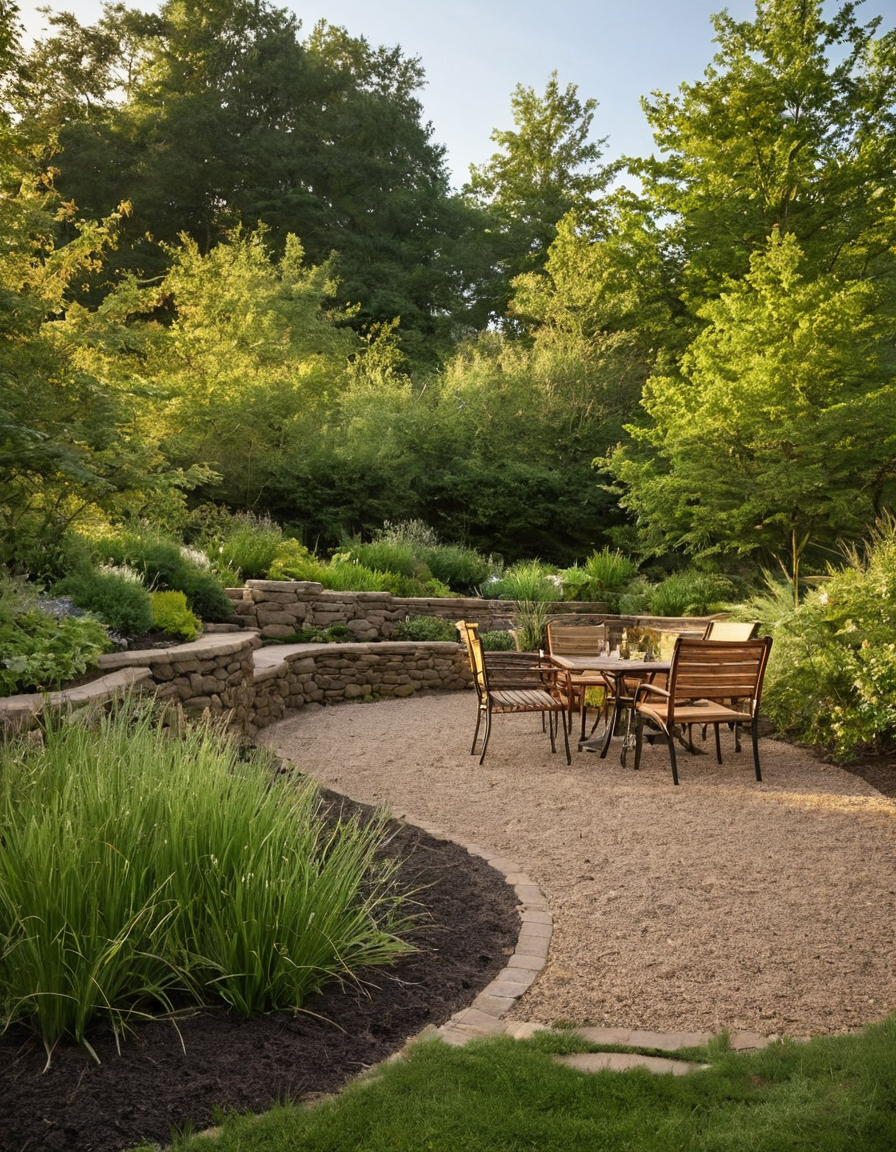
Wind management for outdoor restaurant seating requires a site procedure, not a weight guess shown with outdoor scale and terrain cues.
What evidence supports the stability of each outdoor chair and table?
The submittal should include applicable structural and stability reports for the exact model and configuration. Confirm the test scope, dimensions, mass, footprint, center of gravity, glide construction, leveling range, and intended floor conditions. Identify exclusions involving attached accessories, sloped surfaces, altered glides, umbrellas, or screens.
- If a unit may slide or overturn: test a production sample on the actual patio surface rather than accepting an unsupported weight claim.
- If a building corner or gap channels gusts: map the exposed zone and apply stricter operating controls there.
- If furniture will be stacked outside: verify the manufacturer’s stack limit, stack dimensions, restraint method, and handling instructions.
- If accessories catch wind: obtain separate instructions for umbrellas, screens, barriers, planters, shade products, and any required anchorage or engineering.
When must outdoor seating be moved, stacked, restrained, or removed from service?
The severe-weather procedure should assign a staff role, forecast source, monitoring frequency, and after-hours response. Written thresholds approved by the responsible manufacturer, property manager, insurer, local authority, or qualified engineer should govern umbrella closure, cushion removal, stacking, relocation, and patio closure.
Record clearance time, required staffing, storage location, travel path, door clearance, stack limit, and approved restraints. Do not improvise ballast, tethering, or attachments. Once removal is credible, calculate how much of every opening and closing shift the furniture will consume.
Daily reset labor should be measured before selecting stackable tables and chairs
Stackability does not prove fast reset. Operators should time unlocking, carrying, unfolding, leveling, arranging, wiping, placing cushions, inspecting, and reversing the process after service.
How is patio reset time calculated for the actual furniture order?
Run a representative pilot with sample units, the intended cart, and the actual route, including doors, elevators, floor transitions, and travel distance. Record time per chair, table, cushion, barrier, and accessory. Separate setup, cleaning, inspection, leveling, defect removal, and breakdown.
- Daily labor hours: total observed crew-minutes per reset multiplied by resets per day, then divided by 60.
- Annual labor cost: daily labor hours multiplied by operating days and the applicable loaded labor rate.
- Exception allowance: add observed time for rain, private events, defective units, and severe-weather removal. NOAA station-based climate normals provide monthly, seasonal, and annual temperature and precipitation statistics, subject to station coverage and site conditions.
Which stacking and storage specifications belong in the purchase order?
State the maximum stack quantity, orientation, stacked dimensions and weight, dolly compatibility, protective pads, covers, and rules for damp or seasonal storage. Verify the footprint against ventilation, circulation, utilities, and egress. Where OSHA’s general-industry sprinkler rule applies, stored material must remain at least 18 inches below sprinkler deflectors under 29 CFR 1910.159(c)(10). Local rules may impose additional restrictions.

Daily reset labor should be measured before selecting stackable tables and chairs shown with outdoor scale and terrain cues.
A storage plan can work perfectly while the operating patio still fails accessibility, egress, or permit review.
Outdoor seating layouts must preserve accessible routes, egress, and permitted patio boundaries
Outdoor seating capacity is limited by the approved boundary, accessible route, dining access, egress path, fire features, and operating clearances, not by the number of table symbols that fit on a drawing.
Which clearances must a restaurant verify before approving the patio plan?
Prepare a dimensioned plan showing property lines, permitted boundaries, entrances, exits, curbs, utilities, planters, heaters, and service stations. Resolve conflicts with the authority having jurisdiction, meaning the agency responsible for interpreting and enforcing the applicable rule.
- Mark applicable accessible-route, dining-surface, turning-space, seating-distribution, egress, fire-access, heater-separation, and sidewalk-clear-zone requirements.
- Draw chairs in occupied and pulled-out positions rather than using nominal product width.
- Field-tape the layout and move a service cart and mobility device through it.
- Observe peak host, server, busser, queue, and guest movement before confirming covers per service.
How should outdoor seating bars and raised counters be reviewed?
Outdoor seating bars need a separate review of counter height, accessible dining provision, knee and toe clearance, approach route, stool footprint, occupied depth, footrest, and server workspace. Apply the same movement discipline used when planning bar seating around service cross-traffic.
The field mockup should test glassware handling, queues, stool behavior in wind, and the closing route to storage. A workable layout then becomes part of the final submittal and acceptance package.
A commercial outdoor seating order needs configuration-specific submittals and acceptance tests
The final order should identify every component, finish, supporting document, warranty condition, replacement part, and field acceptance check. Reports and samples must match the production configuration, while a pilot unit must prove leveling, drainage, cleaning, comfort, stacking, layout fit, and reset time.
What documents must be approved before releasing the seating order?
A submittal register should connect each performance claim to a drawing, technical data sheet, test report, finish sample, warranty clause, cleaning instruction, or written manufacturer response.
- Record the exact chair, stool, table base, tabletop, cushion, glide, fastener, finish, color, accessory, and manufacturing origin.
- Require written confirmation that submitted tests cover the specified materials, dimensions, coating system, fasteners, upholstery, and production method.
- Approve drawings, samples, cleaning procedures, warranty exclusions, lead times, minimum quantities, spare-parts availability, and packaging requirements.
- Require proposed substitutions to receive equivalent documentation and renewed written approval.
- Assign signoff duties among the owner, designer, dealer, manufacturer, installer, and facilities team.
Outdoor furniture also benefits from the same discipline used when specifying repairable chair frames, upholstery, and parts. The pilot record should identify test conditions, participants, acceptance criteria, defects, and corrective actions.
Which field checks determine whether delivered outdoor seating is accepted?
- Inspect finish consistency, coating damage, welds, joints, fasteners, glides, seams, drainage openings, packaging damage, and rocking.
- Level sample units on the patio and perform a spot-cleaning test with approved products.
- Run the planned stack, cart, storage, layout, and timed reset procedure with the employees responsible for daily handling.
- Record nonconforming units by item number, quarantine affected products, and apply the agreed replacement or repair process.
- Confirm spare-parts quantities and supplier response deadlines before final payment.
Frequently asked questions
Is powder-coated aluminum or coated steel better for outdoor restaurant seating at this location?
Neither material is automatically better. Compare the exact alloy or steel substrate, pretreatment, coating system, edges, welds, fasteners, corrosion evidence, site exposure, repair method, and warranty exclusions.
What weathering and corrosion test reports should a restaurant request?
Request reports for the offered configuration that identify the specimen, material, color, pretreatment, coating, fasteners, test conditions, duration, measured endpoints, results, and buyer-defined acceptance limits.
How heavy must an outdoor restaurant chair or table be to remain safe in wind?
No universal weight establishes wind safety. Use configuration-specific stability information, a trial on the actual surface, site exposure analysis, and a written procedure for moving, stacking, restraining, or removing furniture.
Can commercial outdoor cushions remain outside during rain or overnight?
Only if the manufacturer’s written instructions permit that use and the complete cushion drains and dries under the site’s conditions. Confirm seams, zipper construction, insert drainage, damp-storage restrictions, and overnight procedures.
How should a restaurant calculate daily patio reset labor and storage space?
Time the full process with sample units, the intended crew, carts, and route. Measure the completed storage stack, including covers and dollies, then verify circulation, ventilation, egress, sprinkler clearance, and handling access.

A commercial outdoor seating order needs configuration-specific submittals and acceptance tests shown as a landscape planning reference.
Release no full order until the exact production configuration passes document review and a timed site pilot.